Artificial intelligence is changing agriculture by helping farmers turn large amounts of farm data into useful decisions. Instead of only collecting information, AI can identify patterns, highlight risks, and support better planning across irrigation, crop health, resource usage, and operational performance.
In practical terms, AI in agriculture is not about replacing farmers. It is about strengthening the decisions farmers already make. When a farm has reliable data from sensors, dashboards, and field records, AI can help explain what the data means and what actions may be useful next.
Why AI Matters for Agriculture
Modern farming faces many variables at the same time. Weather patterns shift, water availability changes, soil conditions vary across zones, and crops react differently depending on the environment. Managing all of this manually can be difficult, especially for larger farms and controlled growing environments.
AI helps by looking at patterns faster than a human team can do manually. It can support early warning, compare past and current conditions, identify unusual changes, and help farmers understand whether a decision should be taken immediately or monitored further.
How AI Works in a Farming Environment
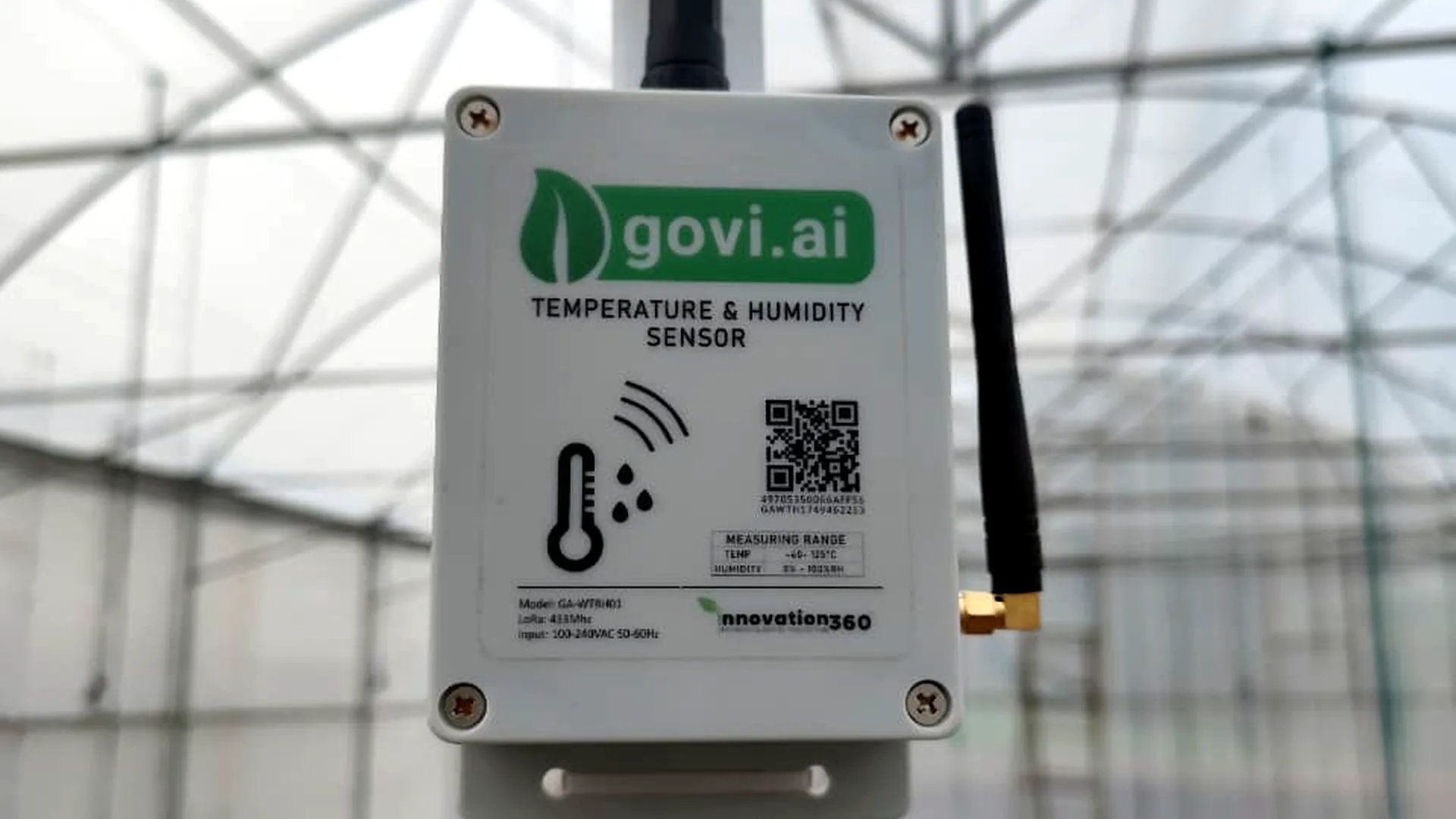
A practical AI agriculture system begins with data. This data may come from soil moisture sensors, temperature sensors, humidity sensors, irrigation controllers, water level readings, greenhouse systems, crop records, and manual observations. Once the data is collected, it is organized through a connected platform.
The AI layer then analyzes the information. It may identify that one area dries faster than another, that a greenhouse pattern is becoming unstable, or that irrigation timing can be improved. The value comes from making this analysis easy for farmers and managers to understand.
Practical Use Cases
One use case is irrigation planning. AI can support better watering decisions by reading soil moisture trends and helping identify the right timing for irrigation. Another use case is greenhouse monitoring, where the system can highlight environmental changes that may affect crop stability.
AI can also support crop performance reviews. A farm manager can study historical data to understand why one zone performed better than another. Over time, these insights can support stronger planning for resource allocation, labour scheduling, and farm expansion.
Benefits for Farmers and Agribusinesses
The main benefit of AI in agriculture is clearer decision making. Farmers can move from reactive management to proactive management. Instead of responding only after a problem appears, they can identify risk signals earlier.
AI also improves operational discipline. When decisions are supported by data, farms can standardize how they monitor, respond, and review performance. This is especially useful for agribusinesses, research institutions, and commercial farms that need consistent reporting.
Common Challenges
AI only works well when the underlying data is reliable. Poor sensor placement, inconsistent data collection, weak connectivity, or unclear operating goals can reduce the value of an AI system. This is why implementation should begin with a practical farm assessment, not only with software.
Another challenge is adoption. Farm teams need dashboards and recommendations that are simple enough to use daily. If a system is too complex, it may not become part of the real farm workflow.
How Govi AI Helps
Govi AI combines IoT monitoring, cloud dashboards, AI powered analytics, and automation workflows so agricultural data can become easier to understand and act on. The platform is designed for Sri Lankan farming environments, including greenhouses, commercial farms, research setups, and smart irrigation projects.
By connecting data collection with practical dashboards and recommendations, Govi AI helps farmers and managers move from isolated observations to connected farm intelligence.
Checklist Before Using AI in Agriculture
- Decide which farm decisions need better data support.
- Start with reliable monitoring before expecting advanced predictions.
- Use clear zones and meaningful sensor placement.
- Train the team to respond to alerts and review reports.
- Measure improvements in water use, response time, crop visibility, and operational consistency.
Frequently Asked Questions
Can AI predict every crop problem? No. AI supports better forecasting and early warning, but farming still requires field knowledge and human judgement.
Does AI need sensors? For the best results, AI should be supported by reliable data from sensors, dashboards, and farm records.
Is AI useful for greenhouses? Yes. Greenhouses benefit strongly from continuous monitoring and pattern analysis because environmental stability is important.
Can AI help reduce waste? Yes. AI can help identify more efficient use of water, labour, and other resources when accurate data is available.
Conclusion
AI is becoming a practical tool for agriculture because it helps farmers understand complex conditions more clearly. The best results come when AI is connected to real farm data, simple dashboards, and a clear operating purpose.
Govi AI supports this transition by bringing monitoring, analytics, automation, and farm intelligence into one connected platform for modern agriculture.